Imagine pausing the decisive touchdown of a game, getting up from the couch and walking around the play. You step behind the quarterback, crouch next to the receiver, then rise above the field to see the whole defense collapse. No editor chose those angles for you: you did. This is the promise of 4D Gaussian Splatting, and after years of lab demos it is finally showing up in stadiums, music videos and Hollywood productions.
From 3D photos to 3D videos
To understand 4DGS you first need its older sibling, 3D Gaussian Splatting (3DGS), the technique that took the computer graphics world by storm in 2023. Instead of building a scene out of rigid polygons, like a video game does, 3DGS describes it with millions of tiny, soft, semi-transparent blobs of color called splats. Think of them as 3D brush strokes: each one has a position, a shape, a color and a level of transparency. Packed together, they recreate a real place with photographic realism, and a normal graphics card can render it in real time from any point of view.
The catch is that a classic splat is frozen in time, like a 3D photograph. 4DGS adds the fourth dimension: time. The result is a moving scene you can pause, rewind and explore from any angle. The simplest definition is also the most striking: it is video with a free camera.
Sports had this dream first
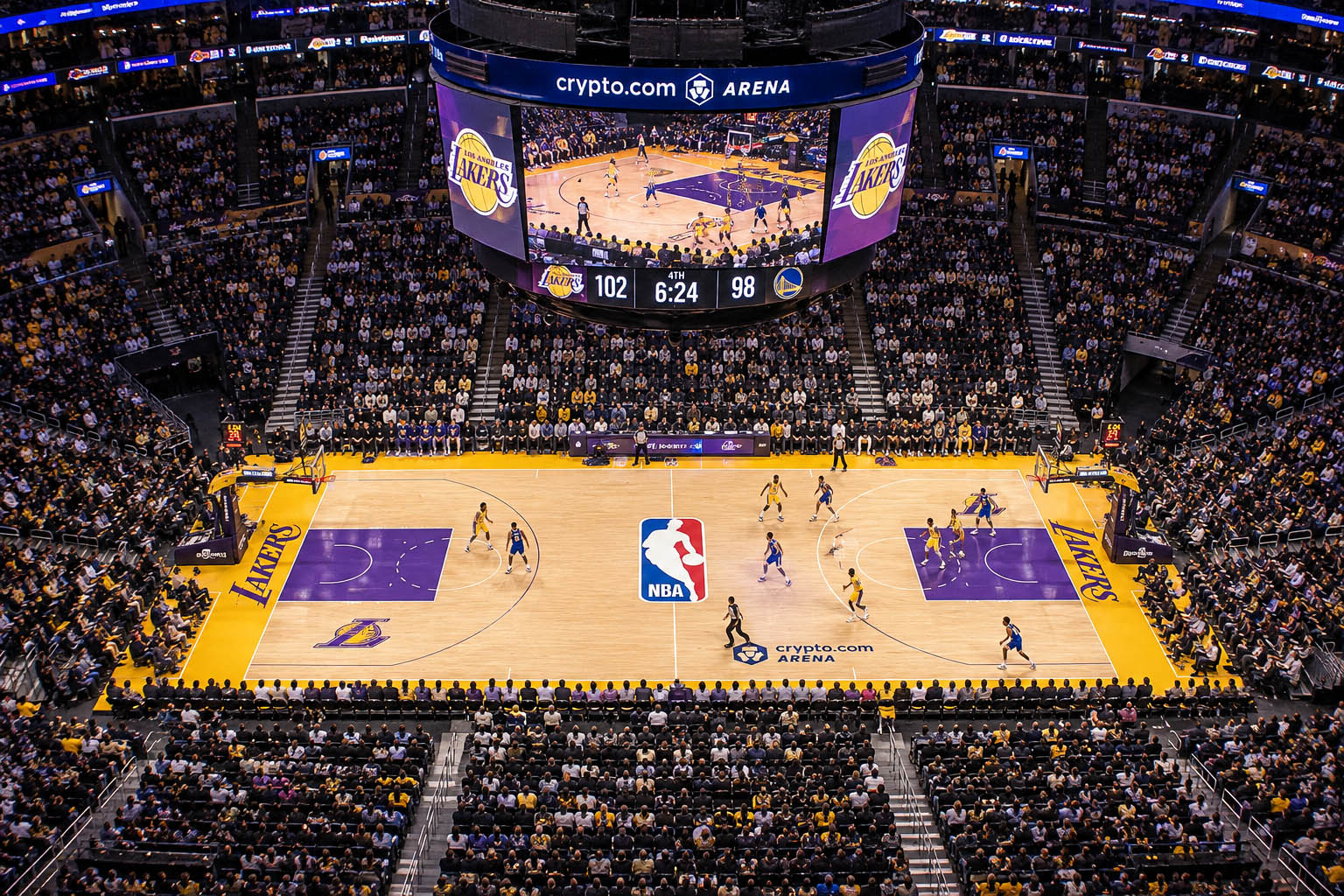
Sports have chased this idea for a quarter of a century. In the early 2000s the NFL experimented with EyeVision, an early "bullet time" system that let viewers orbit around a frozen moment. Later, Intel True View took the concept further: rings of dozens of 5K cameras were installed in the home stadiums of around 20 NFL teams and in several NBA arenas, producing 360 degree replays used during Super Bowls and NBA Finals broadcasts.
Those systems proved that fans love to see a play from impossible angles. But they also showed the limits of the old approach: the scene was rebuilt out of voxels, tiny cubes, and every short clip generated around a terabyte of data. The replays were spectacular but slow to produce and often looked more like a video game than real footage.
What changed in 2026
Gaussian splatting changed the equation, because it crossed the line between "looks like computer graphics" and "looks like video". Here are some of the most significant experiments of the last months.
- Arcturus and live sports. This company turns multi camera footage from real stadiums into explorable three dimensional replays. Its cameras are roughly the size of a fist, small enough that the crowd does not notice them, and the team has shown shots that no physical camera could take, like the view from right behind a baseball catcher's mitt. Their stated goals for 2026 include hockey, basketball and figure skating, and the next big step is bringing processing times down to real time.
- The PGA Championship. At the 2026 edition, Radiant Images captured the swings of four professional golfers as 4D Gaussian splats using 56 iPhones synchronized over a private 5G network, not a million dollar rig. The replays, processed in the cloud, could be explored in 3D and smoothly ramped from slow motion to a full freeze.
- Live TV graphics. At NAB 2026, virtual production vendors started shipping plugins that bring photorealistic splat environments directly into live broadcast graphics.
- Instant replays. Gracia presented a World Reconstruction Model designed to generate free viewpoint replays in near real time for sports broadcasting.
What it could mean for NBA and NFL fans
None of the major American leagues has yet made 4DGS a standard part of its broadcasts, but the use cases are easy to picture, and several companies are already pitching them.
Choose your own camera. During a replay you could follow a star player's off ball movement, drop to court level during a fast break, or watch a field goal from the kicker's point of view.
Fairer calls. The charge or block call is one of the most debated decisions in basketball. Instead of comparing three or four flat angles, a referee could orbit the contact point in a single 3D scene and check the defender's feet and body position frame by frame.
Smarter film study. A quarterback could relive a sack from inside the pocket, watching the defensive pressure close in around him, while a coach studies the same play from above.
Courtside from your living room. With a headset like Apple Vision Pro or a Meta Quest, highlights would stop being flat videos and become scenes you can walk through, life size.

Entertainment is already on board
If sports are the most obvious playground, film and music are moving even faster.
- James Gunn's Superman became the first major feature film to use dynamic Gaussian splatting sequences in production.
- For A$AP Rocky's "Helicopter" music video, the volumetric studio Evercoast deployed a 56 camera rig to capture almost every performance, including performers suspended on wires. The shoot generated more than 10 terabytes of raw data for a single video.
- Japanese group Perfume released a concept movie built with Gaussian splats, the natural evolution of their long running experiments with volumetric video.
- Digital Nation Entertainment and Gracia released the first 4DGS music performance streamed in real time, starring singer Amy May and playable directly in a web browser. It reached around 1.5 million views in its opening weekend.
- Arcturus reconstructed live action scenes from a MrBeast video as dynamic splats, allowing editors to find camera moves that no physical rig could have captured.

The camera is no longer a physical object placed somewhere in the venue. It becomes a creative choice, and sooner or later it will be the viewer's choice.
The hurdles still on the field
It would be dishonest to call the job done. 4DGS still needs dense camera arrays, perfect synchronization and very careful calibration, especially in a stadium where cameras shake and lighting changes. The amount of data is enormous, and fast, crowded action, like a pile of players under the basket, is still hard to reconstruct cleanly.
The other open front is distribution. Static splats are converging on shared formats, while moving ones are still fragmented. Things are moving here too: MPEG has asked for dynamic splat test material ahead of an official call for compression proposals, and at IBC 2026 Nokia streamed dynamic splats using standard video streaming technology to consumer headsets.
The next revolution of entertainment
Color, high definition, slow motion, the multi camera replay: every big leap in sports and entertainment has given viewers a better seat. 4D Gaussian Splatting goes one step further and takes the seat away altogether, letting you stand anywhere inside the moment.
The pieces are coming together quickly: cheaper cameras, faster processing, browsers and headsets able to play splats smoothly. The first live free viewpoint replays in professional basketball and football are no longer science fiction, they are an engineering problem. And when that problem is solved, watching a game or a concert will mean something very different: not looking at it, but stepping inside it.
Want to dig deeper? This guide to 4D Gaussian Splatting collects the tools and productions available today.