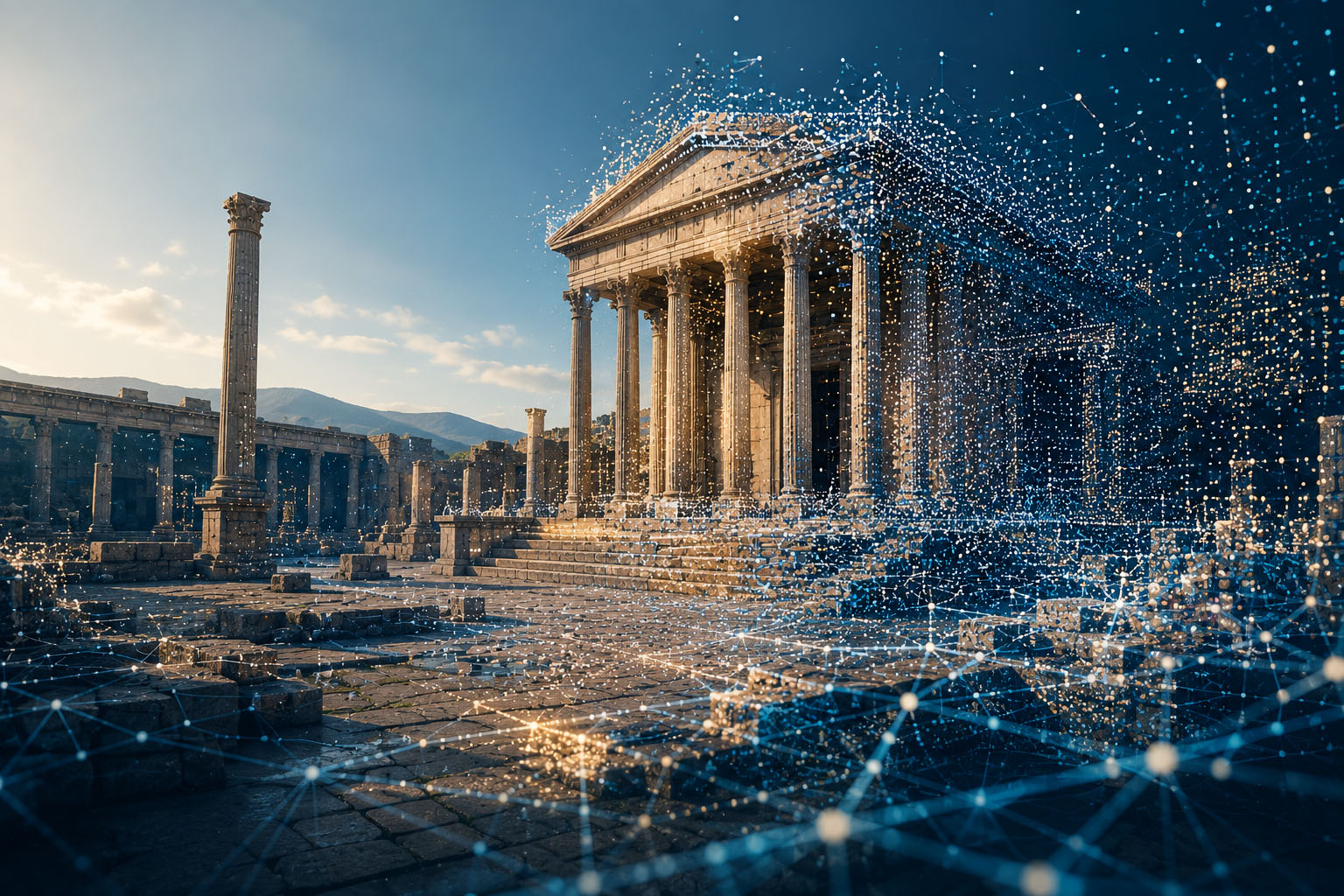
In the landscape of graphic innovation, one technology is rapidly surpassing the limitations of traditional 3D models: Gaussian Splatting. Unlike classic polygonal meshes, which require monumental modeling efforts to achieve realism, Gaussian Splatting creates extremely accurate three-dimensional representations from a series of 2D photographs. The result is an image that not only captures the geometry of objects but precisely replicates light reflections, material depth, and subtle chromatic nuances, achieving a level of photorealism that seemed unattainable in real-time just a few years ago.
The true turning point of this technology lies in its navigational potential. Unlike simple laser scans or panoramic videos, Gaussian Splatting allows for free-roaming exploration within an environment. Because the model is built upon a cloud of "gaussians" small volumetric mathematical entities that dynamically adjust to the observer's perspective, the movement experience remains fluid and immersive. This ability to virtually "walk" through a space, observing details from every angle without the distortions typical of classic photogrammetry, opens up unprecedented scenarios for real estate, entertainment, and design.
A field of extraordinary importance is the preservation of cultural and historical heritage. Mapping historic buildings or archaeological sites via Gaussian Splatting means creating a permanent digital archive with surgical precision. For historians and conservators, this technology becomes a tool for preventive protection: it is possible to monitor a structure's degradation over time, analyze architectural decorations, or preserve the visual memory of endangered sites, ensuring that future generations can explore them as if they were still perfectly intact. Every texture, every crack, and every play of shadow is digitally "frozen" with a visual fidelity that transcends standard photography.
Furthermore, the efficiency of this methodology allows for the digitization of complex spaces from frescoed chapels to monumental complexes in times drastically shorter than traditional surveying techniques. This not only democratizes access to cultural heritage, enabling museum-quality virtual tours, but also provides restorers with a volumetric database upon which to perform targeted maintenance interventions based on high-quality visual evidence.
In conclusion, Gaussian Splatting is not merely a sophisticated graphic stylistic exercise, but a true documentary revolution. By blending cinematic aesthetics with technical surveying precision, this technology is redefining how we interact with digital space, offering us the key to preserve, explore, and narrate the beauty of our world with clarity never seen before.