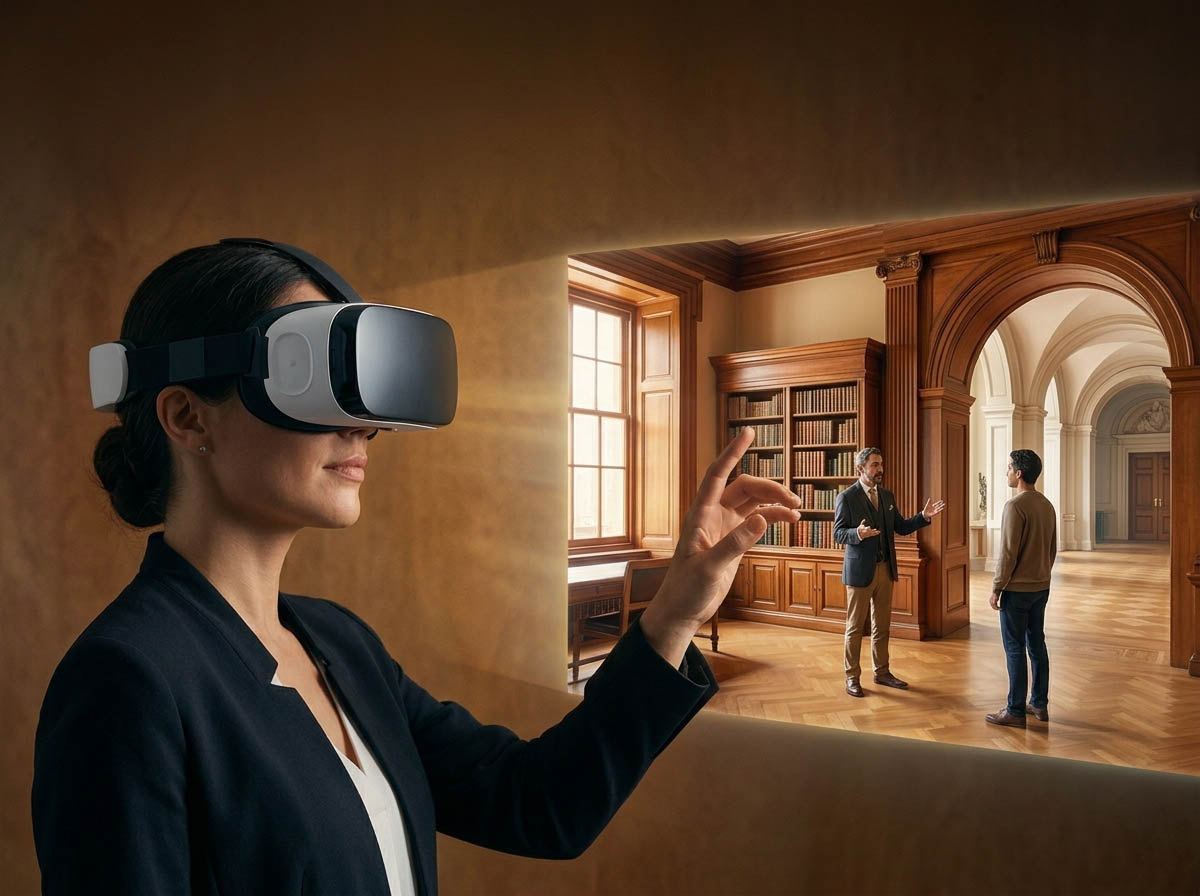
In today's digital landscape, the line between passive observation and lived experience has become remarkably thin. While the concept of a "virtual tour" was once limited to the static exploration of an environment, we are now witnessing a true revolution: the rise of storytelling-driven VR experiences. This new frontier does not merely display a space; it utilizes mechanics borrowed from the gaming world and cutting-edge narrative techniques to transform a standard navigation into a memorable journey that adapts seamlessly to the visitor's needs.
The most fascinating potential of this approach lies in its inherent flexibility. Imagine, for instance, the ability to choose between two antithetical yet complementary modes of engagement: absolute exploratory freedom and guided narration. In the former, the user is free to move as they would in an open-world video game, interacting with environmental elements, triggering multimedia insights, or discovering hidden details in an autonomous, constraint-free exploration. It is the ideal experience for those who wish to savor a location's aesthetics, linger on architectural details, or test the flow of a venue for a future event, enjoying total control over their personal journey.
Parallel to this, we find the path of guided narration a digital "Virgil" who accompanies the user along a expertly curated path. In this mode, the experience is no longer a sequence of shots, but a story that unfolds. A narrator or a guide perhaps a virtual concierge or an art historian leads the visitor through the rooms, pausing at focal points, sharing untold anecdotes, and fostering an empathetic bond that simple viewing could never generate. The virtual "Virgil" does not just show; they explain, interpret, and breathe life into the physical environment, transforming a simple visit into a history lesson, a corporate presentation, or an unforgettable branding experience.
The strength of a VR experience structured in this way lies precisely in the multiplicity of its narrative solutions. The same property can be "told" in radically different ways depending on the target audience: a potential corporate retreat host could be guided through a tour focused on technological infrastructure and spatial privacy, while a design enthusiast could explore the very same location by focusing on furnishings, materials, and lighting, guided only by their own intuition. This level of customization not only exponentially increases the time spent within the experience but elevates the brand's perception, demonstrating a commitment to curating not just the physical product, but the quality of time the user spends in their digital space.
Ultimately, the integration of gaming mechanics and guided narrative flows within VR experiences marks the transition from the era of the image to the era of the experience. We are no longer talking about simple marketing tools, but narrative ecosystems where the user is once again the protagonist. Whether one chooses to explore solo as a spatial adventurer or to be led by the hand through a discovery path, the VR experience confirms itself as the most powerful medium at our disposal to bridge distances, build trust, and transform desire into a vivid, indelible lived experience.