Digital Enhancement Project: The Immersive Ecosystem of the *Albergo Diffuso*
This document outlines the strategy for developing a Virtual Reality Experience (VRE) dedicated to an *albergo diffuso* (scattered hotel) model situated within a historic setting. The primary objective is to create a digital ecosystem where the accommodation units—distributed throughout the village's urban fabric—integrate seamlessly with the area's historical, artistic, and natural assets. The *albergo diffuso* is no longer merely a lodging facility; it becomes the pivot of a comprehensive narrative experience capable of transforming the village into an accessible, interactive open-air museum.
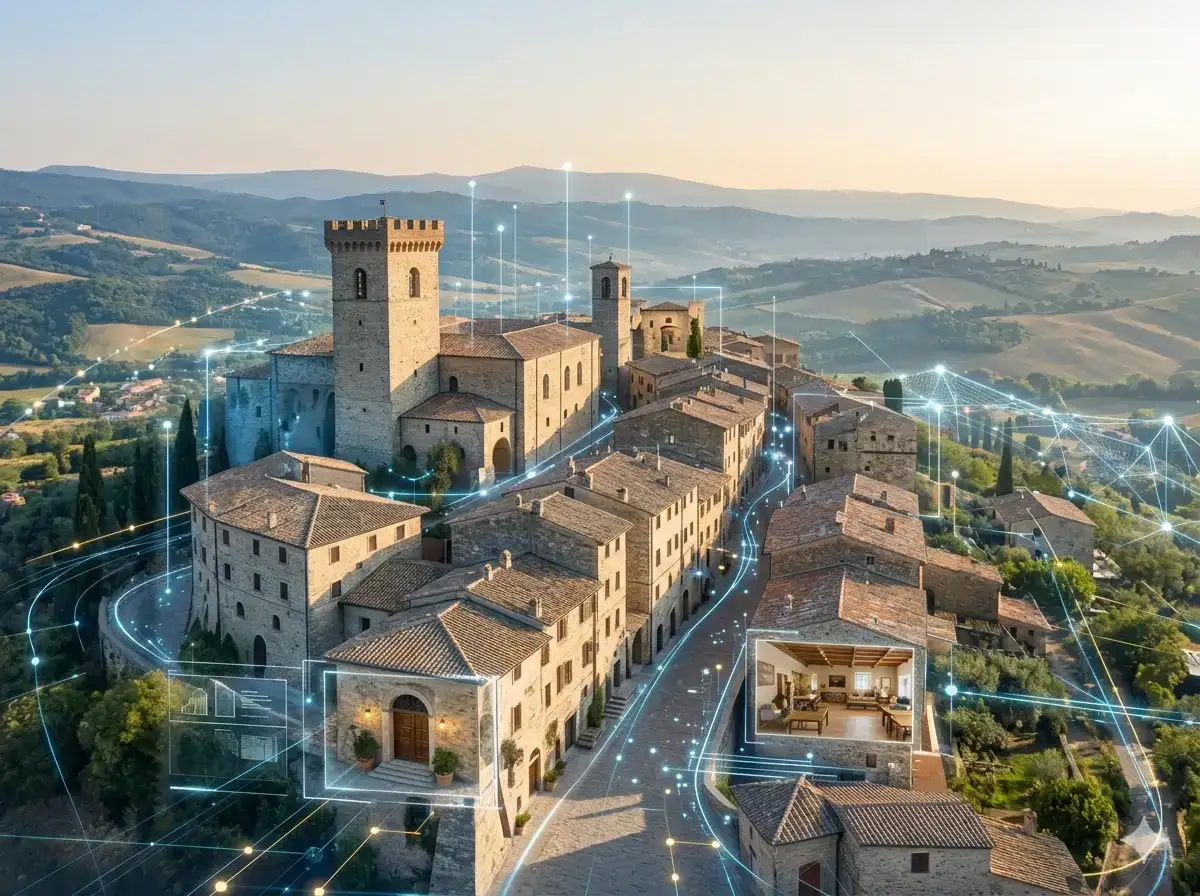
Immersive Ecosystem Architecture The integration between the accommodation and the village is achieved through a VR architecture in which each location functions as an interconnected module. Accommodation units, common areas, and hotel services serve as starting points, while monuments, nature trails, and artisan workshops constitute the stages of exploration. Every element within the virtual space holds a dual nature: it can be visited as a standalone point of interest or act as a connecting node within a broader narrative.
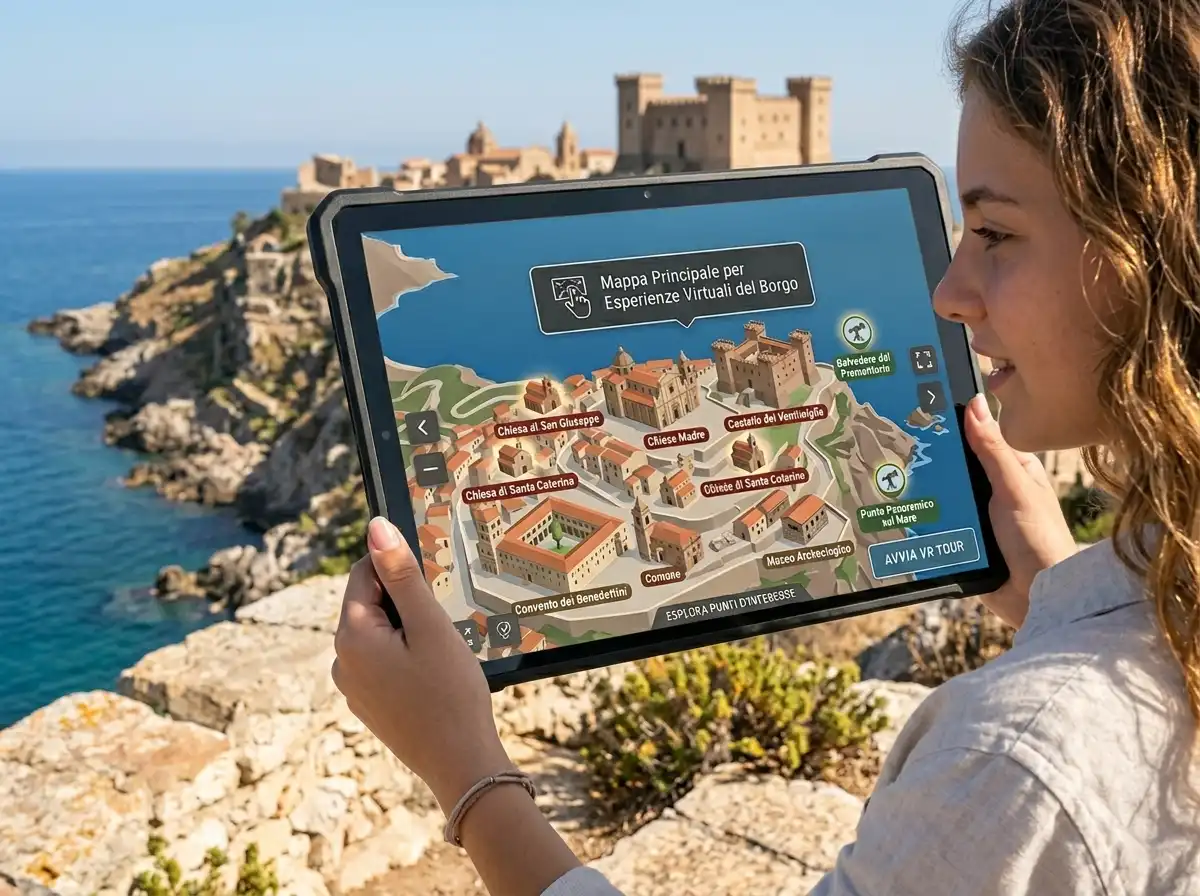
The VRE structure offers flexible usage, allowing the user to choose between free exploration and guided routes. These routes are tailored to the traveler's specific interests. A user interested in religious tourism, for example, might be accompanied by a virtual avatar—an art history expert—who guides them along an optimized itinerary featuring churches, monasteries, and cloisters.
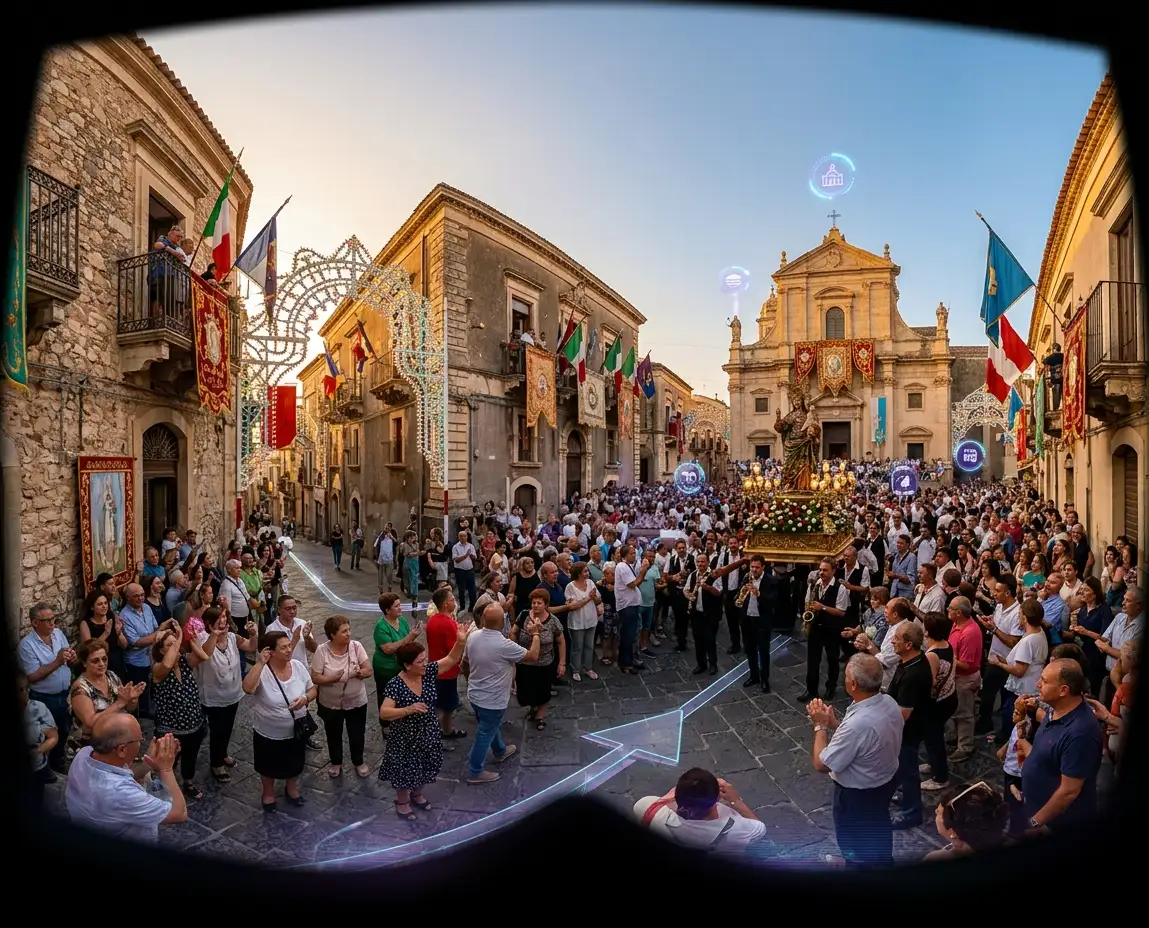
At the same time, users interested in ecotourism can explore nature trails that feature local flora identification and hiking path visualization. Each node within the ecosystem is enhanced with multimedia elements, including multilingual audio guides, location-based information pop-ups, and interfaces offering in-depth details.
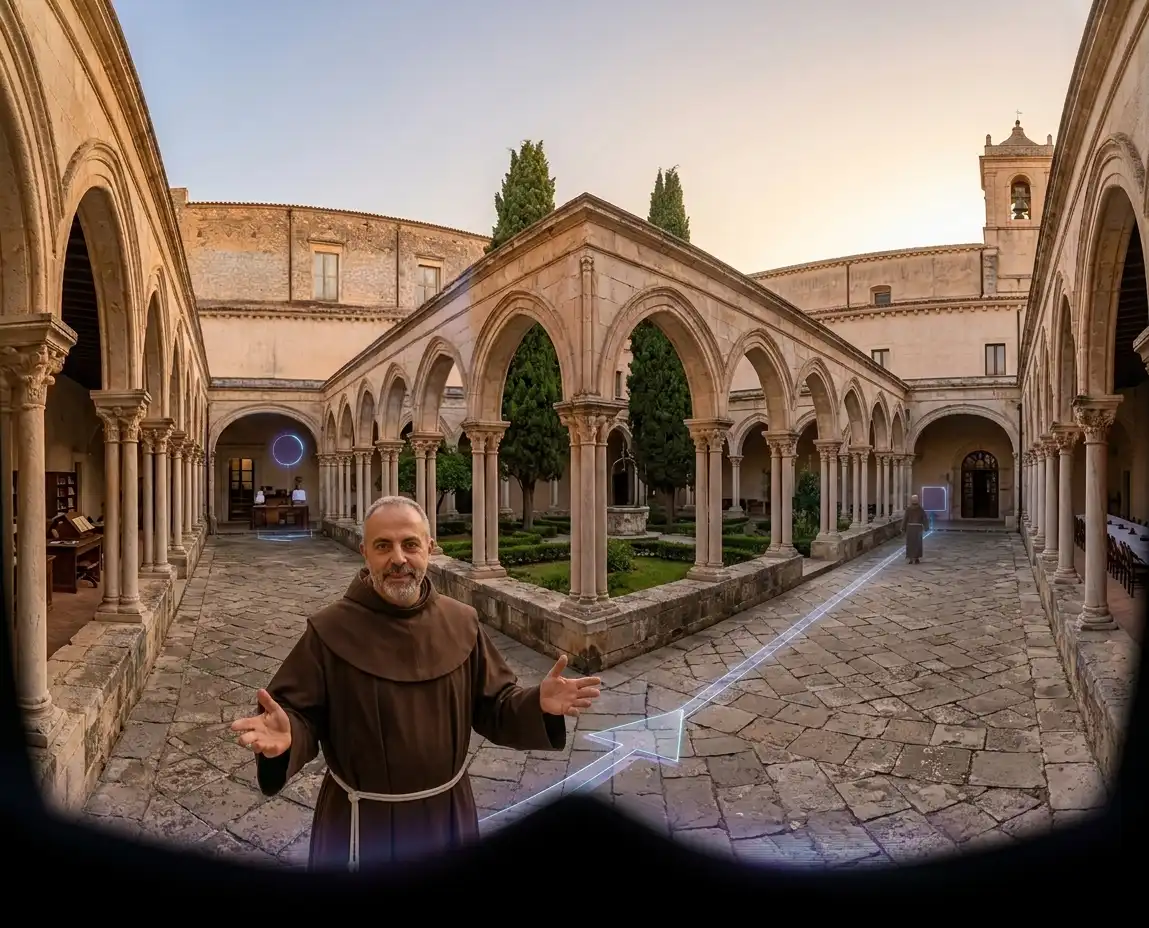
Virtual avatars act as guides, providing information on hotel services and experiences available within the village.
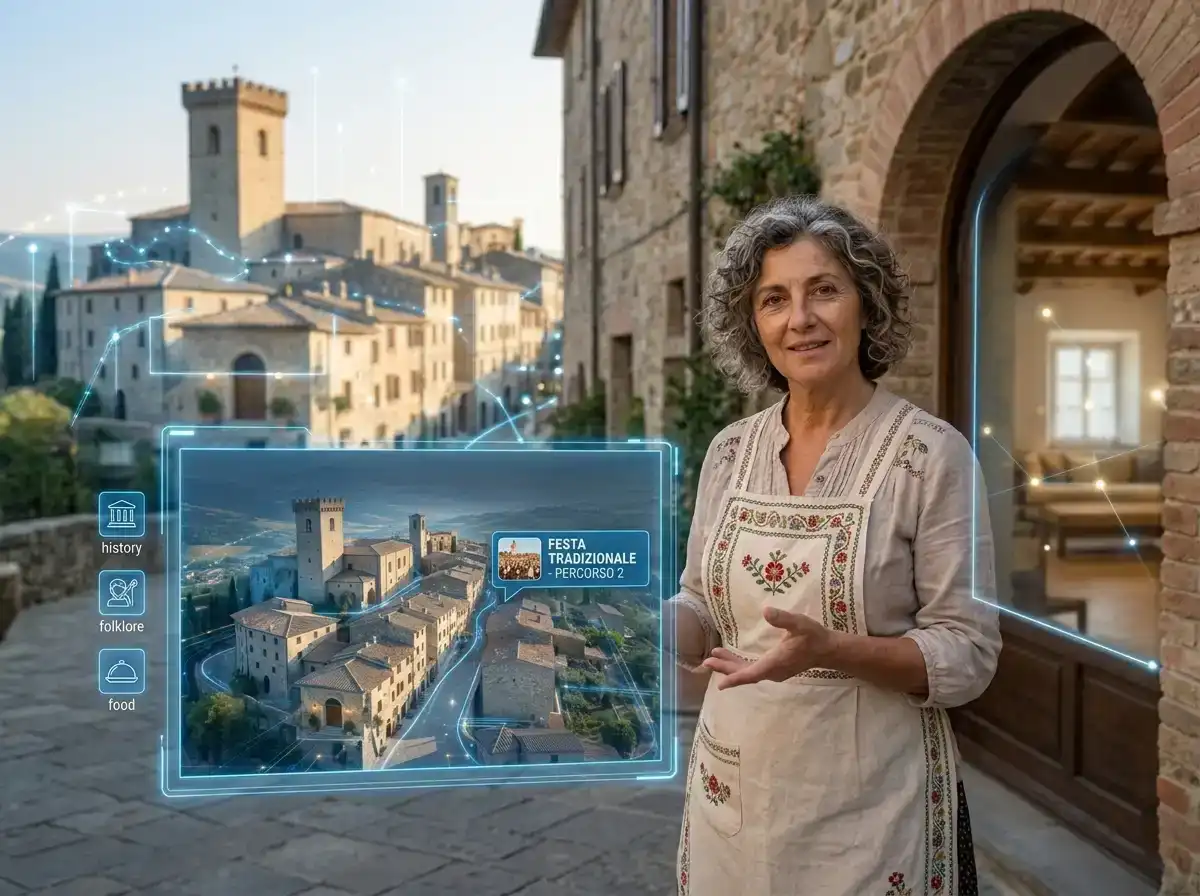
Authenticity and Destination Perception In a digital landscape characterized by a proliferation of AI-generated or heavily manipulated content, VR technology serves as a guarantee of authenticity. Spherical capture and immersive experiences allow users to examine the environment critically and realistically, as this format precludes selective omissions or alterations of the field of view. This visual transparency fosters a high level of trust among potential customers, who perceive the tourism offering as authentic and consistent with physical reality. By transcending the limitations of traditional photography—which is often subject to filters and misleading angles—the *albergo diffuso* (scattered hotel) presents itself as an establishment with nothing to hide, thereby dramatically increasing booking conversion rates.
SEO Strategy and Future Visibility Implementing a VRE represents a strategic long-term investment, particularly regarding search engine optimization. With the growing adoption of dedicated hardware—such as virtual reality headsets, spatial computing devices, and augmented reality glasses—major search engine algorithms are evolving to prioritize the indexing of spatial content. A website that natively integrates a full VR experience enables a property to appear in priority search results when users query the system via compatible devices. Organic visibility will benefit from increased time-on-site, a metric search engines interpret as a signal of high content relevance and quality. The ability to offer an immersive preview directly within search results—or via a direct link that opens in virtual reality environments—creates an immediate competitive advantage over rival properties that still rely on two-dimensional formats. This digital ecosystem thus acts as a powerful driver of qualified traffic, ensuring a consistent presence in search streams associated with high-end experiential tourism.